
True Love Transforms
Minister's Letter: May 2025 No.2

Dear Grace Church,
Yesterday was a heartening day for me.
First, I was able to sit through a full service holding my 1 month old for much of it. Also, sitting in the middle of a full room, the singing was fantastic.
Second, the reason I was able to sit in with you all was that in the morning we had Ben Traynor preaching his trial sermon as he seeks to be licensed as a Minister in the Free Church of Scotland. Later in the evening, we as a family travelled to St Peter’s Dundee where Scott Hamilton was preaching his trial sermon. It was a delight to hear these young men preach the word clearly, always aiming at faithfulness to the word and at the heart of those listening.
We didn’t get a chance to hear too much about it yesterday morning, but the church plant in the Garioch region of Aberdeenshire was mentioned. If you’d like to know a little more about it, click on this link here.

Two weeks ago, we explored Christ’s teaching that, “where your treasure is, there your heart will be also” (Luke 12.34). Jesus in saying this is drawing back the curtain, helping us to see that those who set their affections on earthly trinkets will end up like them, rusted and faded. Yet those who love the treasure of heaven will be kept forever safe (see 1 Peter 1.3-5).
Henry Scougal wrote that “a noble and well-placed affection enhances the soul’s desire to be conformed to the perfection of the things that it loves.” Here Scougal is tapping into broader biblical teaching. Throughout Scripture, we see that it is not just a future reality, but what we treasure transforms how we live and who we are right now.

In the monthly Minister’s Letters this year, we are looking at the lives of saints from the past and sitting under their teaching. The hope is that in the retrieval of the wisdom of the historic church it will aid the renewal of the contemporary church’s worship, witness, and work.
Henry Scougal was a Professor of Divinity in Aberdeen in the 17th century. He died at only 28 years old but left a rich legacy. His most famous work was a letter written to a friend disaffected with the religion he saw around him. This letter was later reprinted and published as The Life of God in the Soul of Man. George Whitefield, maybe the most prolific evangelist during the Great Awakening of the 18th century, recounted that upon reading Scougal, the light cut through the fog of false religion in his heart and drew him to the true religion of union with Christ.
I want to focus on one short section of the letter, where Scougal directs us as to how our loves shape and form us. He contends that to truly “ennoble and improve our souls”, we must target our love on that which lifts us beyond ourselves.
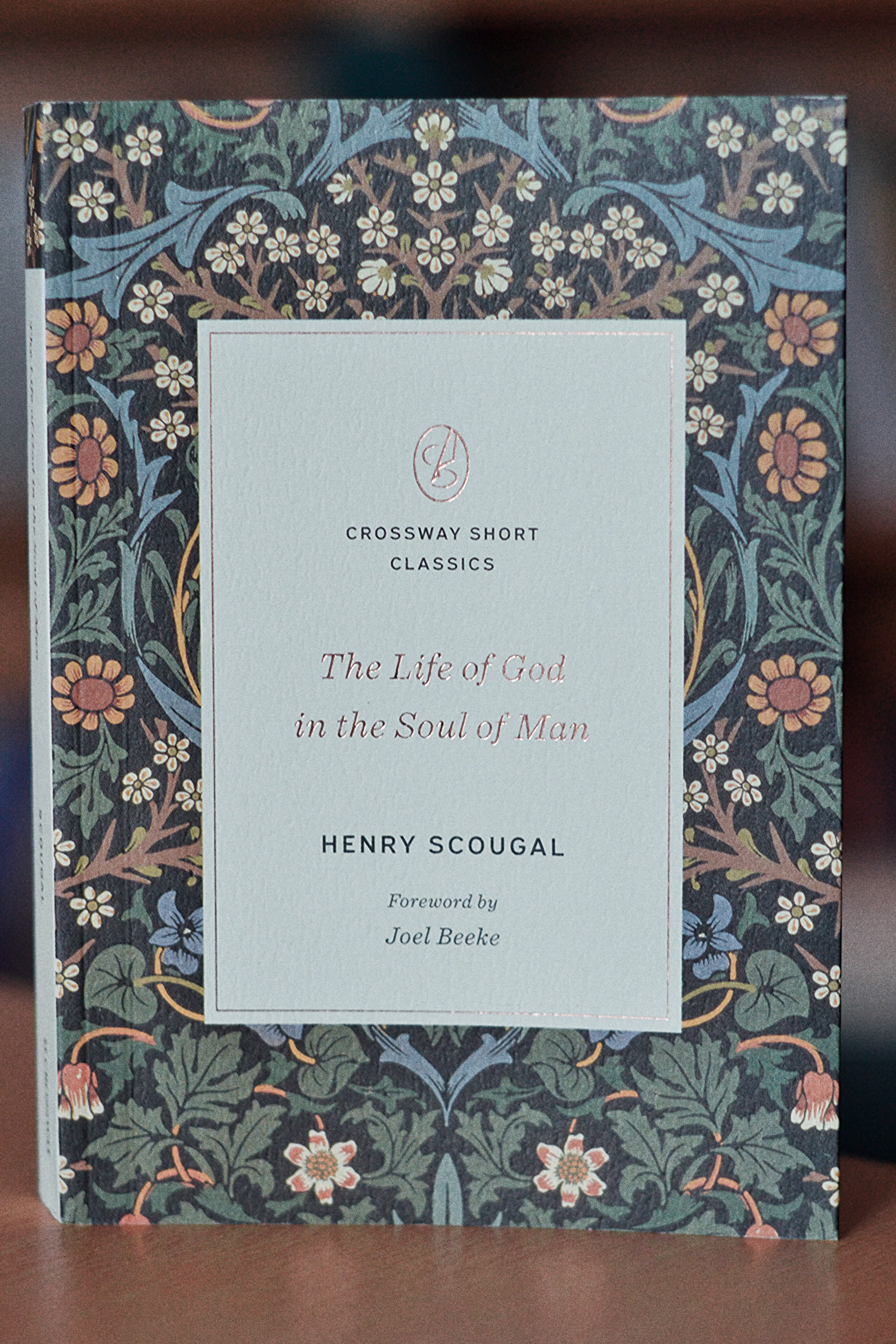
Scougal points first to the infinite nature God as a true comfort. He writes that “the nature of love is so large and unbounded that it feels extremely pinched when confined to any mere creature.” A mature and healthy love has learned that no person or object can ever meet the demands of the heart. No girlfriend or husband can satisfy the yearnings of the soul. But when human love experiences the steadfast love of God, it is finally truly satisfied and even overwhelmed by what it has encountered.
Next, Scougal reminds us of the assurance when loving God, we will be loved back truly, wholly, and perpetually. There is no greater ache to the heart than a love which is not returned. A moment of real love is vulnerable, because when we give all of ourselves, we also open ourselves up. So when this receives a cold shoulder, the heart turns cold. But with the eternal and faithful God, all those who give themselves to God, receive a steadfast love that endures forever. Scougal writes beautifully of this reality, “If God’s goodness is as infinite as his being, and his mercy saved us when we were enemies, how can God not choose to embrace when we have become his friends! It is utterly impossible that he should deny his love to a soul who is wholly devoted to him.”
Scougal presses further into deep comfort the love of God lays before us. For love hurts not just when it is spurned but also when it is not answered. We might be separated from those we love either by an ocean or the veil of death. Yet if we love God, we will never be separated from him, even in the midst of this world’s griefs (see Romans 8.31-38). For God is omnipresent, meaning that he is always where we are. He is always listening and always remembers us.
Finally, Scougal reminds us that we become like who we love. He notes that even the most fortunate person lives under the clouds of the world as it currently is. No one is free from the griefs and sadnesses of life east of Eden. This is a truth we all know, having seen friends who were once bright and radiant dulled by the clouds of those they love. Yet God’s happiness is unpolluted and “without the possibility of it being diminished.” The happiness of God cannot be perturbed as he has lived in perfect and pure harmony as Father, Son, and Spirit for all eternity. There are no grey skies in the Godhead. And those who love God are drawn ever deeper into his happiness.
In Christ,
Ciarán R. Kelleher
May Treat
Wes Huff is a scholar of the ancient manuscripts of the Christian Scriptures. Over the last number of months, he has busted a number of myths around the Bible and compellingly commended the Christian faith on some of the world’s largest and most popular podcasts. Below are the first two episodes in a series about how we can trust the Bible. Future episodes are currently in production but enjoy these today and for free:
Home Group: John 13.1-17
What do we learn about the length and depth of love of Jesus in this passage? Why would the foot cleaning have been not just surprising but borderline absurd to the disciples (8)?
What reality does the washing of the feet point toward (9-10)? Why do we need to be cleansed and how does Jesus do it?
Jesus says we are to follow his example. Why might we find it hard to serve like that? Should we also wash each other’s feet or what might we do to emulate Christ?